6 Gardens to Visit this Spring
Spring is here — new growth, short-lived and generous all at once. These six gardens are worth seeking out in the coming weeks.
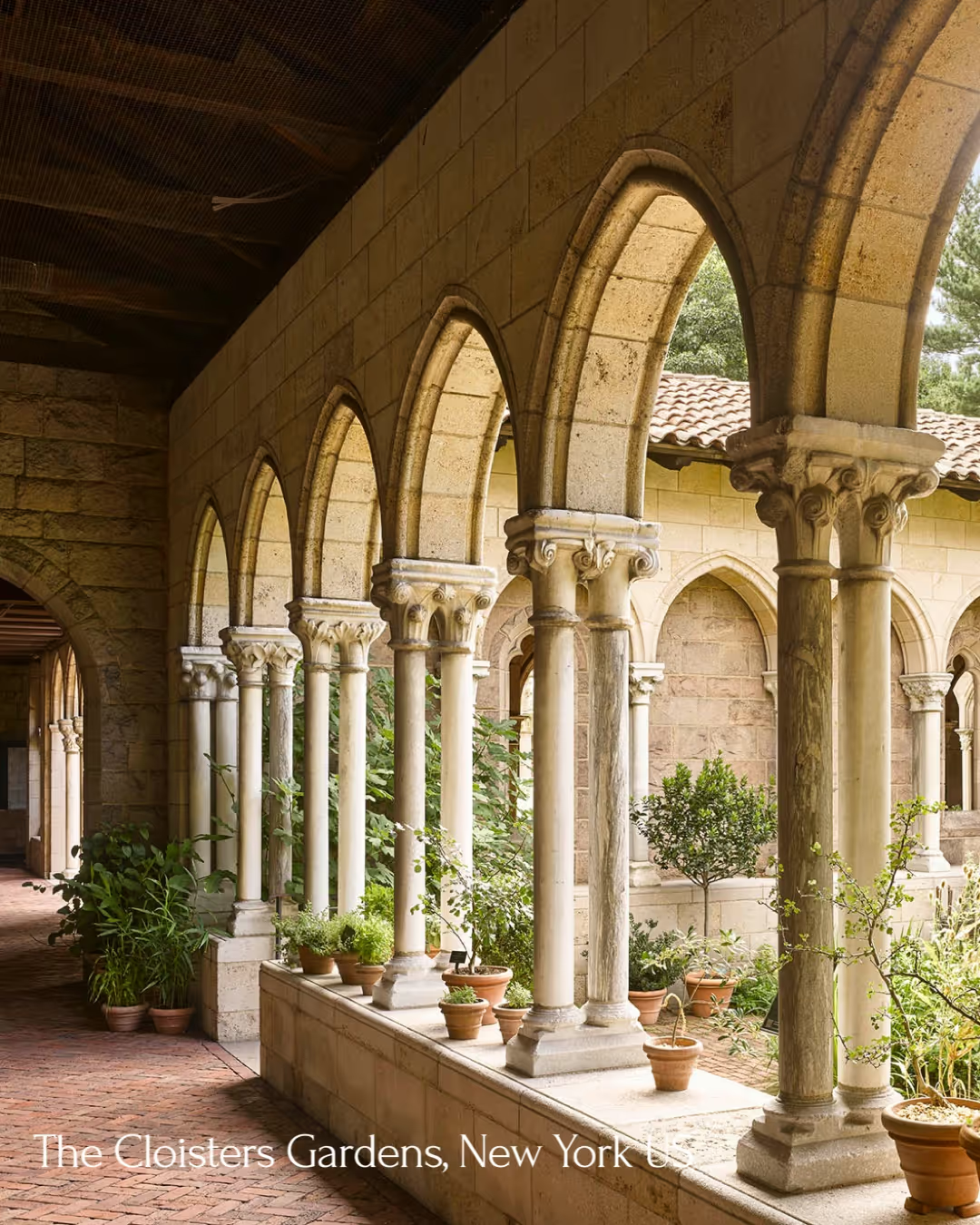
The Cloisters, New York City
Designed by Charles Collens
Perched on a hilltop in Fort Tryon Park in Upper Manhattan, The Cloisters is one of the most quietly extraordinary places to spend a spring morning in New York. A branch of the Metropolitan Museum of Art devoted to the art and architecture of medieval Europe, the building itself was designed by architect Charles Collens — also responsible for Riverside Church — and formally opened in 1938. Collens integrated architectural elements from five actual medieval cloisters, primarily sourced from abbeys in Catalonia and France, into a cohesive structure that feels genuinely timeless.
But it is the three enclosed gardens — the Cuxa, Bonnefont, and Trie Cloisters — that reward a spring visit most deeply. The Bonnefont Herb Garden holds one of the most specialised medieval plant collections in the world, its raised beds and wattle fences planted with over 300 species documented in medieval treatises, herbals, and works of art. The foundation of the plant list is a ninth-century edict by the Emperor Charlemagne, naming 89 species to be grown on his estates. Spring brings the herbs into their first flush — lilies, roses, mint, thyme, rosemary — alongside lesser-known species like mandrake, medlar, and dragon arum. The Trie Cloister garden, inspired by the famous Unicorn Tapestries housed within the museum, offers colour and fragrance from early spring through late autumn. The Hudson River and the New Jersey Palisades shimmer beyond.
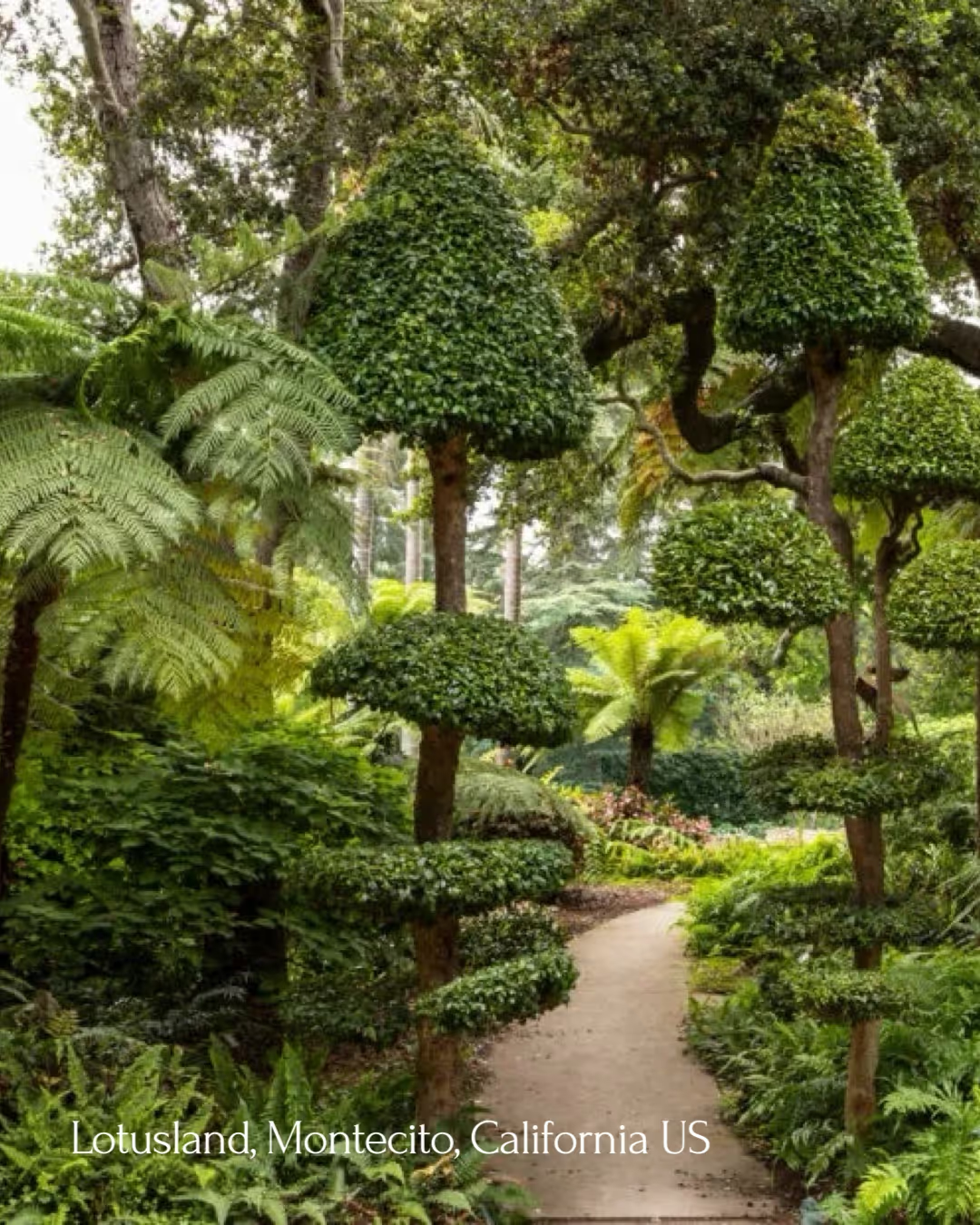
Ganna Walska Lotusland, Montecito, California
Created by Madame Ganna Walska
Few gardens in the world carry as much biographical weight as Lotusland. The 37-acre botanical garden in Montecito, near Santa Barbara, was the life's work of Madame Ganna Walska — a Polish opera singer, socialite, and six-times-married eccentric who purchased the estate in 1941 and spent the next four decades turning it into one of the most unusual and spectacular gardens on earth.
Born Hanna Puacz in 1887, Walska had toured Europe and the United States as a coloratura soprano, collected husbands, launched a perfume called Divorcons, and arrived in California in search of spiritual enlightenment. When her sixth marriage dissolved, she claimed the estate as her own and threw herself headlong into the garden. Working with landscape architect Lockwood de Forest Jr., she created a series of distinct garden rooms — each one a theatrical expression of her penchant for the dramatic, the unexpected, and the whimsical. The collections of exotic and tropical plants are staggering: over 3,500 species from across the world, including one of the finest cycad collections in existence, a Japanese garden, a topiary garden, and a cactus garden of almost surreal ambition.
Walska died in 1984. Lotusland opened to the public in 1993 and is now named one of the ten best gardens in the world. Visits require advance reservation.
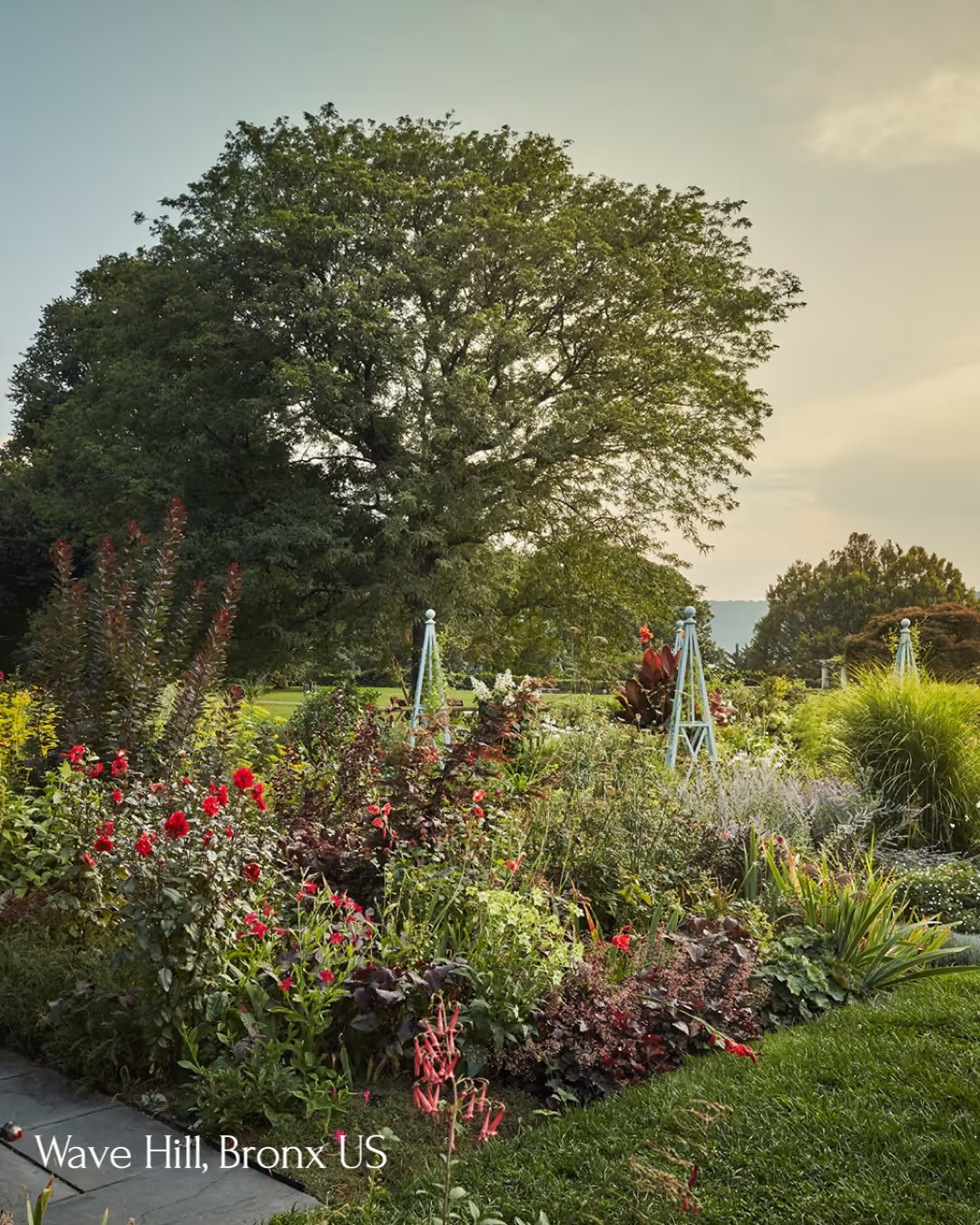
Wave Hill, The Bronx, New York
Garden Direction: Cathy Deutsch
Tucked into the northwest corner of the Bronx, overlooking the Hudson River and the Palisades beyond, Wave Hill is one of New York City's most beloved and least-expected treasures. The 28-acre public garden and cultural centre sits on land that has, over the centuries, been home to Theodore Roosevelt, Mark Twain, and Arturo Toscanini — but it is the garden itself, under the direction of Cathy Deutsch, that draws visitors back season after season.
Spring is when Wave Hill is at its most generous. The Gold Border erupts with daffodils, leading visitors up toward the Kerlin Overlook and the upper gardens. The Wild Garden, tucked among the trees, fills with small spring flowers — crocus, wildflowers, early woodland blooms — that appear briefly and brilliantly before the season moves on. The Shade Border, often overlooked, is described by the garden's own team as a place that blooms "profusely and abundantly this time of year, but only briefly" — which is reason enough to go now. Hundreds of spring bulbs appear throughout the garden in varietal combinations that shift from early to late spring, producing a display that is never quite the same twice.
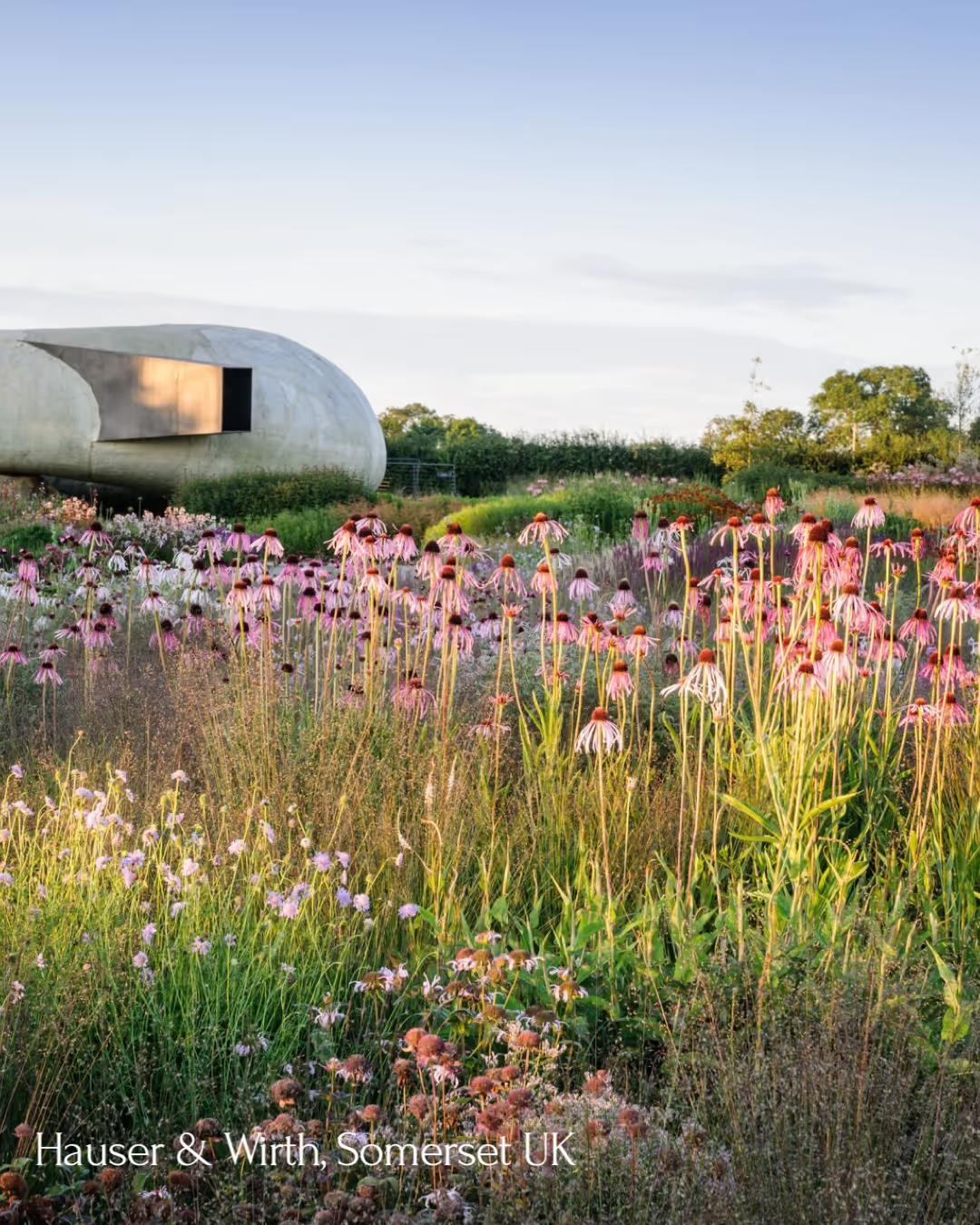
Hauser & Wirth Somerset, Bruton, UK
Garden by Piet Oudolf
On the outskirts of Bruton in Somerset, the international art gallery Hauser & Wirth occupies a converted farmstead — and its garden, designed entirely by the Dutch master plantsman Piet Oudolf, has become a destination in its own right. The centrepiece is Oudolf Field: a 1.5-acre former agricultural field, now planted as a sweeping perennial meadow, laid out in 17 curving, interlocking beds divided by a broad gravelled path.
Oudolf's approach here is characteristically uncompromising. "I look at the form of a flower, and how it will last," he has said — and the Field is designed to hold beauty at every stage of the year, not just at peak bloom. In spring, camassias and alliums push through in great drifts, offering a quieter, more contemplative version of the space before it reaches its thundering summer crescendo of rudbeckias, echinaceas, heleniums, and sedums. The planting feels less like a garden and more like a landscape — faithful to its setting, painted in great swoops of plant life across a flat canvas. The gallery buildings, exhibitions, and restaurant make this a full day out, but the Field alone is worth the journey.
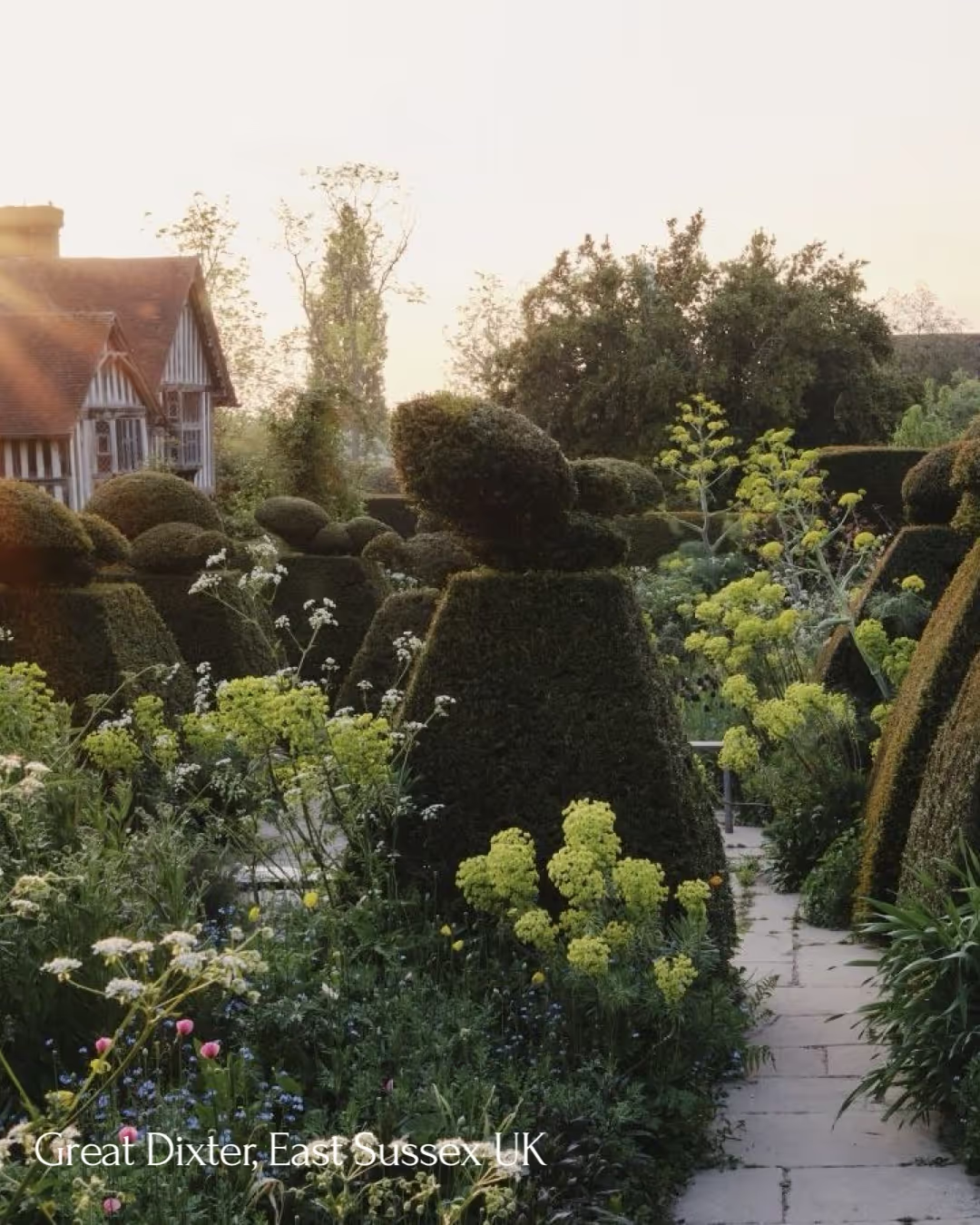
Great Dixter, East Sussex, UK
Head Gardener: Fergus Garrett
Great Dixter is not a garden that stands still. The East Sussex estate — a 15th-century house restored by Edwin Lutyens and made famous by the writer and plantsman Christopher Lloyd — has been in a state of joyful, restless evolution for over a century. Since Lloyd's death in 2006, it has been stewarded by Fergus Garrett, who worked alongside him as Head Gardener from 1993 and has since become one of the most respected and innovative horticulturalists in Britain.
Spring at Dixter is a particular kind of magic. The Front Meadow, nurtured from the earliest days of the Lloyd family's tenure, is a living tapestry of native grasses and wildflowers that arrives briefly and brilliantly each year. The orchard meadow, the topiary, the sunken garden, and the Long Border — which extends its season from April through to October — all come alive in sequence. The planting is profuse yet structured, full of bold experiments in form, colour, and combination that reflect both Lloyd's legacy and Garrett's own restless curiosity. Great Dixter is a garden that rewards attention, and spring is the moment when that attention is most generously repaid.
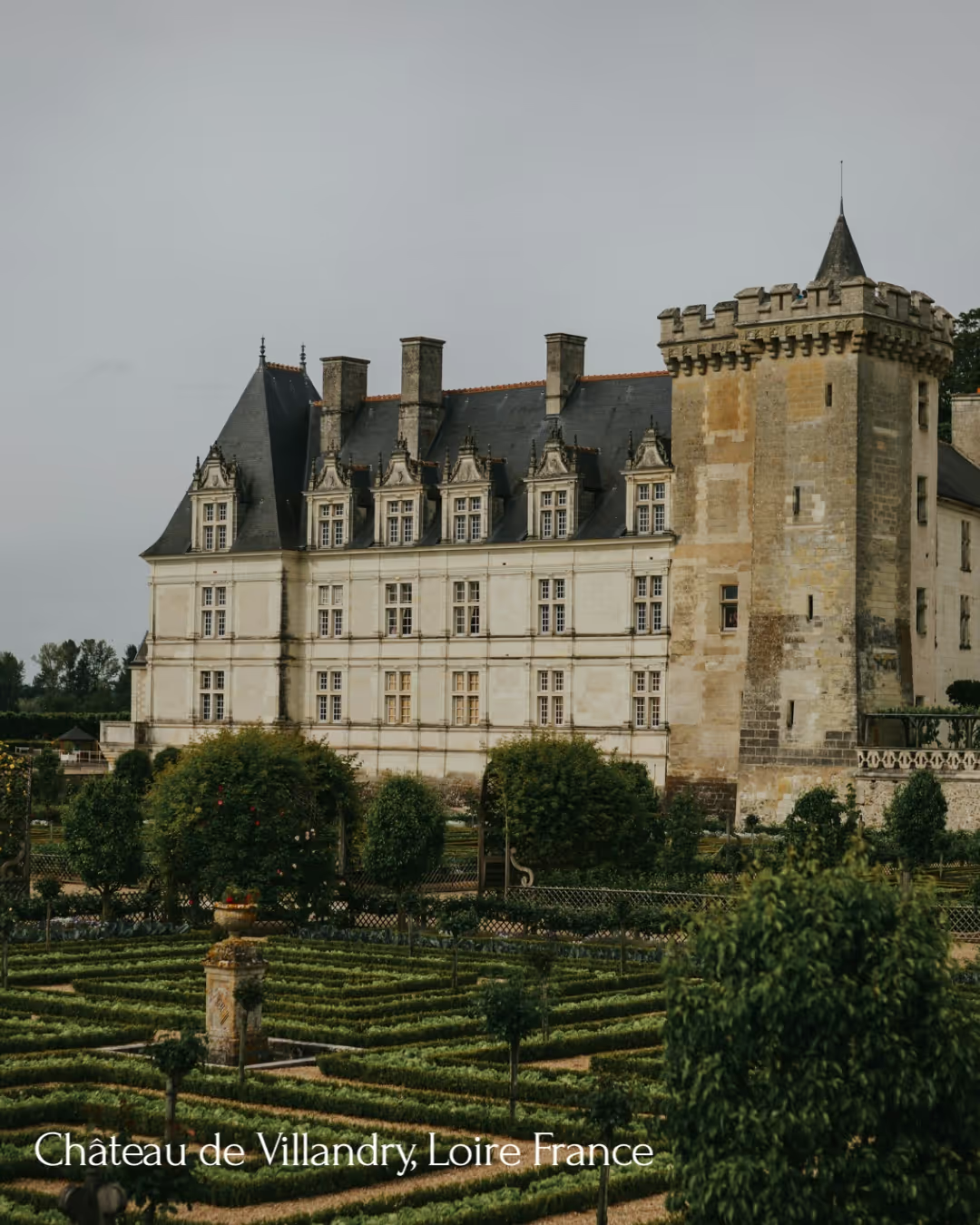
Château de Villandry, Loire Valley, France
Head Jardinier: Laurent Portuguez
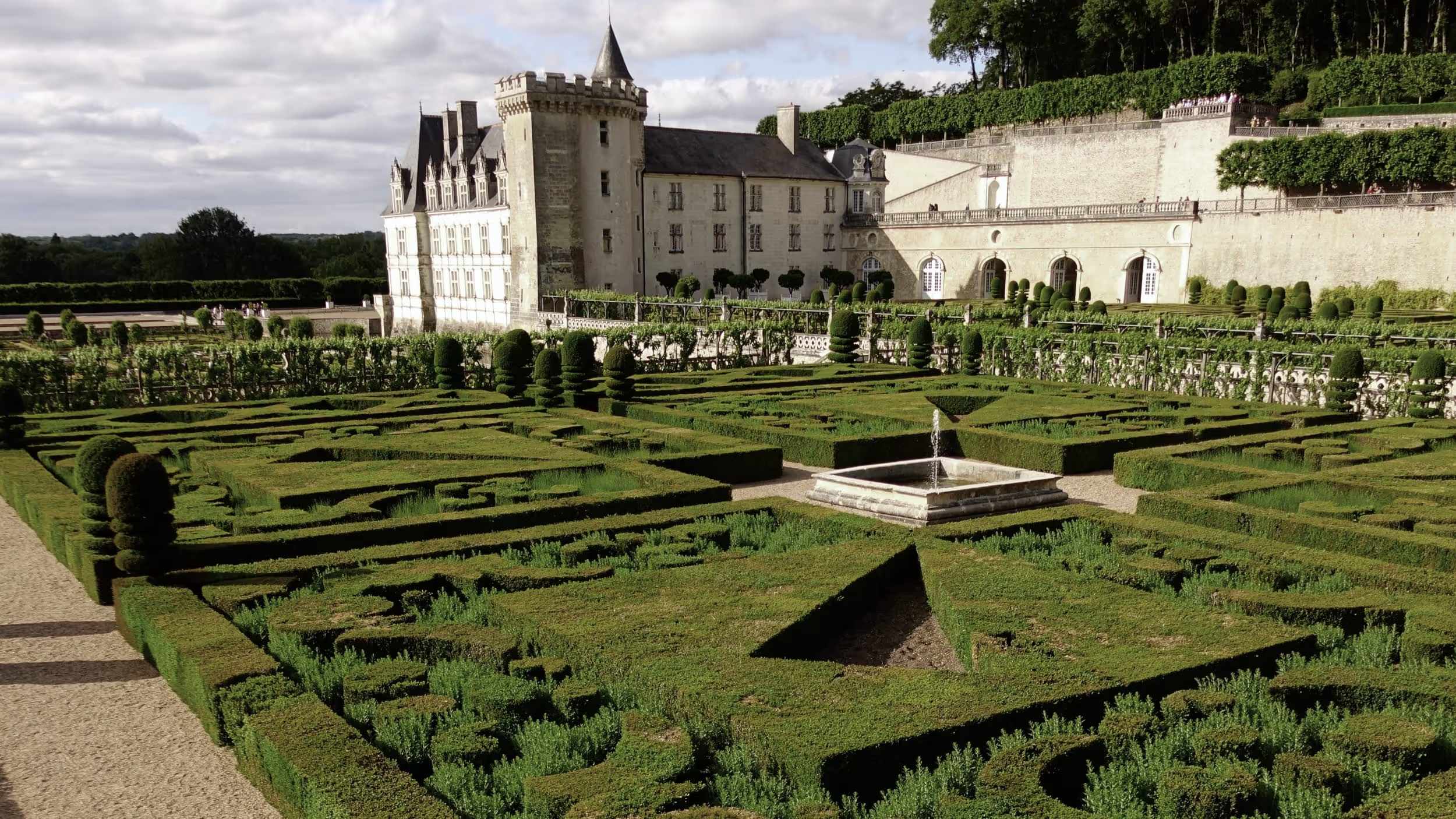
Of all the châteaux of the Loire Valley, Villandry is the one that belongs most completely to its gardens. The château itself dates to the 16th century, but the extraordinary formal gardens that surround it are the creation of Joachim Carvallo, a Spanish-born medical researcher who purchased the property in 1906 and spent decades restoring it to a vision of Renaissance grandeur. Today, under the care of Head Jardinier Laurent Portuguez — who has also led the estate's transition to fully organic cultivation — seven distinct gardens unfold across three terraces, covering seven hectares in total.
The centrepiece is the Ornamental Kitchen Garden: nine squares of geometric planting, each with a different pattern, filled with vegetables and flowers in alternating colours — blue leek, red cabbage, jade-green carrot tops — that read from above like a vast, living chessboard. Spring brings the first planting of the year, when the beds are freshly laid out and the geometry is at its crispest. Above, the Ornamental Gardens present symbolic designs in clipped box and flowering plants — the Gardens of Love, with their patterns representing tender, passionate, and fickle love — while the Water Garden reflects the sky from the highest terrace. There is nowhere else quite like it.